


The check-in process sets the tone for the entire patient experience. Unfortunately, teams spend hours dealing with front-desk tasks every day. Paper forms. Manual data entry. Last-minute scrambles. These admin duties compound fast, frustrate staff, and take time away from patients.
Digital patient intake changes that. It moves repetitive work into the pre-visit stage, before patients arrive. Forms get filled out at home, and information lands in your system early. The result? Less paperwork, fewer day-of-visit bottlenecks, and a smoother patient check-in experience.
This article is for healthcare providers and practice decision-makers who want to lighten the load. You’ll learn how digital patient intake, pre-visit forms, and communication tools cut down paperwork, manual entry, and front-desk workload.
Let’s dive in.
Key Takeaways
- Traditional patient intake creates extra work through paper forms, duplicate entry, and missing details.
- Digital patient intake shifts check-in tasks to the pre-visit stage, easing waiting room congestion.
- Automating high-friction tasks first, like forms and reminders, delivers quick wins without a major overhaul.
- Digital intake improves accuracy and patient experience at the same time.

Why Traditional Patient Intake Creates So Much Administrative Work
Paper-based patient intake is slow by design. Patients arrive, grab a clipboard, and start filling out the forms. Staff then type everything into the system by hand. That’s double work for one set of information.
Errors creep in, too. Handwriting is hard to read, and fields are often skipped. Insurance details come back incomplete. Each gap means a phone call or a follow-up request.
When forms get filled out at the desk, the line also backs up. One delayed patient can push the whole schedule late. These small frictions have big effects.
- Manually entering or re-entering patient information often results in wasted time per patient. For example, primary care (family and internal medicine) practices spend an average of 7.3 hours on administrative work in electronic health records (EHRs).
- Inefficient patient intake processes and unexpected increases in patient volume can cause long wait times. One MGMA poll found that wait times for new-patient appointments increased by 31%.
- Instead of real-time digital verification, staff often waste time on phone calls to insurers or navigating outdated portals. Registration errors and incorrect data are the top causes of initial claim denials.
What looks like minor paperwork issues quietly drains time and money. The big takeaway here: traditional intake forces too much work into the worst possible moment.
Digital patient intake solutions can change all of this. It reduces the front-desk workload by moving time-draining check-in tasks before the appointment.
RELATED CONTENT: How to Reduce Administrative Burden in Healthcare with Technology
How Digital Patient Intake Moves Work Before the Appointment
Digital patient intake flips the timeline. Instead of doing everything at the desk, patients complete tasks in advance.
Here’s how it works. Automated systems text or email secure links to patients, allowing them to fill out histories, sign consents, upload ID cards, update their contact info. and insurance, and pay co-pays at home or from their phone. By appointment day, your team already has clean, complete information in hand. This shift does several things at once.
- It reduces waiting room congestion.
- Allows staff to start each visit prepared. They can spot missing details early and fix them before the patient arrives.
- Reduces manual data entry and errors. Intake responses flow directly into the correct fields of the EHR as structured data.
- By setting required fields in digital forms, patients are less likely to skip sections, reducing the need for staff to make follow-up calls or hunt down missing information.
- Self-check-in allows patients to confirm their visit from a phone or kiosk, preventing in-office visit bottlenecks.
Less scrambling. More readiness. That’s the core benefit of digital intake.
Which Patient Check-In Tasks Should Be Automated First?
You don’t need to automate everything at once. Start by considering which tasks cause the most friction. Is it getting the right insurance information? Reminding patients of appointments? To get you started, focus on these five common tasks first:
- Digital forms: Replace paper intake with online digital intake forms that patients complete before arrival.
- Self-check-in: Let patients confirm their visit from a phone or kiosk.
- Appointment reminders: Send automated texts or emails to cut no-shows.
- Insurance details: Collect and verify coverage in advance.
- Routine patient updates: Let returning patients refresh contact and history info on their own.
Here’s an example. Say a busy family medicine practice sees 40 patients a day. Each paper intake takes staff about five minutes to process. That’s over three hours of manual entry daily. Switch to digital forms, and most of that data flows in automatically. Staff shift from typing to reviewing, saving hours every week.
By taking one step at a time, you don’t need a full workflow overhaul. Each step lowers staff workload while your team keeps its familiar routine.
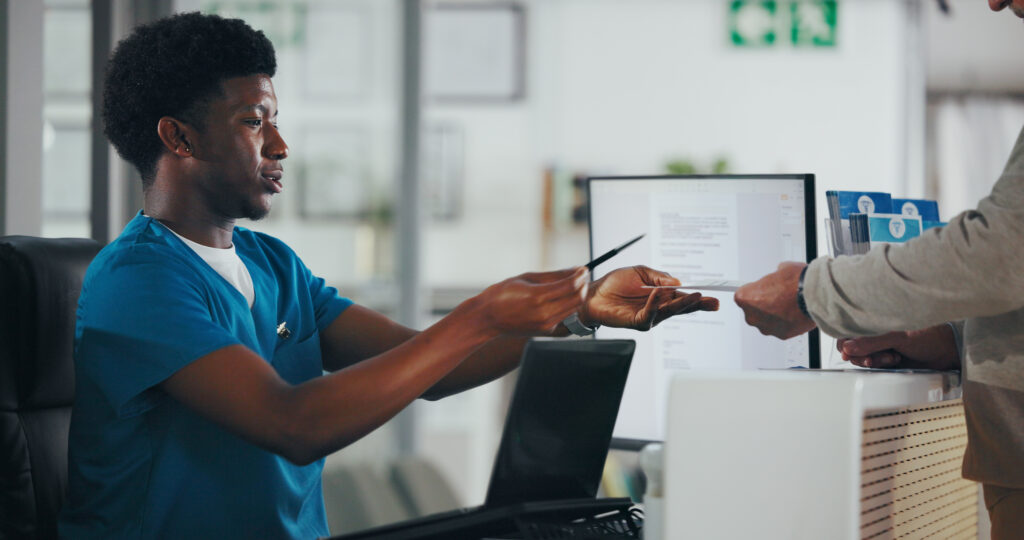
How Digital Intake Improves Accuracy and Patient Experience at the Same Time
Data accuracy and a positive patient experience usually feel like a trade-off. By adopting a pre-visit digital strategy, you get both.
Accuracy
Customizable forms guide patients through the right fields, and required questions can’t be skipped. This results in more accurate and complete records. Online completion also means no messy handwriting to decode. And when data syncs straight into your system, it reduces repetitive paperwork. Fewer hands on the data means fewer errors.
Patient Experience
They can fill out forms at their own pace, at home. This allows patients to avoid the anxiety of a crowded waiting room. Digital intake software also auto-fills known information, requiring patients to only review, update, or provide new data, saving them time. And when they arrive, check-in is fast and clear. They know what to expect, and so does your team.
These gains build on each other. Clean data means your staff is better prepared. Better preparation means less confusion at arrival. And a smooth, modern front-desk experience makes patients feel cared for from the first moment they contact your office.
Efficiency and a better experience aren’t separate goals here. Digital patient intake delivers them together.
What to Look for in Digital Patient Intake Software
Not all tools and features are created equal. The right digital patient intake software should move work earlier, not pile on more desk tasks. Use these criteria to evaluate your options:
- Mobile-friendly forms: Patients should be able to complete intake easily on any smartphone or tablet.
- Specialty-specific customization: Forms should match your practice and the care you provide.
- EHR syncing: Data should flow directly into your records, with no manual entry.
- Automated reminders: Built-in nudges should reduce no-shows and prompt form completion.
- Patient portal access: A central hub keeps forms, messages, and updates in one place.
- Communication tools: Messaging should support completion before the visit, not create more work at the desk.
Why DrChrono Fits the Bill
DrChrono is an all-in-one electronic health record (EHR) built around these needs. It features an intuitive, mobile-friendly patient portal, automated reminders, digital intake, and self-check-in. Together, these tools keep patients engaged before, during, and after each visit.
The key advantage is connection. Every interaction syncs directly into your EHR. So your team always works from current, complete information and can deliver informed care across the full patient journey.
Here’s how DrChrono moves front-desk work into the pre-visit stage:
- Digital patient intake forms are available through the patient portal, enabling providers to collect vital patient information before patients even step into the office, streamlining patient check-in and minimizing paperwork.
- Automated patient appointment reminders and digital check-ins reduce no-shows and speed up onboarding.
- Customizable consent and intake forms let you onboard new patients quickly and painlessly with forms tailored to your specialty and practice size.
- Communication is streamlined with messages, forms, and updates that flow directly into the EHR.
The Future of Automation and AI Digital Intake
The future of AI and digital intake in medical practices centers on frictionless, hyper-personalized patient journeys and autonomous administrative workflows.
For example, the future of medical intake is shifting from static digital forms to agentic workflow support models—where AI systems actively manage, verify, and route patient data. These intelligent agents can coordinate scheduling, communication, intake, and follow-up processes across front-office operations with human oversight
The future also shows that practices are increasingly using digital scheduling, automated reminders, digital intake software, and patient communication platforms to reduce administrative burden and improve operational efficiency.
By leveraging technology like ambient listening and predictive AI, systems can pre-populate forms, verify insurance instantly, and seamlessly route clinical data directly into EHR.
The future goal of AI in medical practices is not replacing staff, but creating smoother workflows, improving visibility into operational bottlenecks, and allowing teams to focus more time on patient support and care coordination.

Final Thoughts on Digital Patient Intake
Traditional patient intake crowds too much work into an appointment day. Digital patient intake fixes that by moving forms, consents, and updates to the pre-visit stage. Patients can complete forms, consents, and updates at their own pace and from anywhere.
The data flows into your system, reducing paperwork and errors. Patients have a smoother check-in journey, and you get the accuracy you need all at once.
Ready to shift your check-in tasks before the appointment?
Contact DrChrono today to see how you can create a smoother check-in process and deliver a patient experience that feels effortless from start to finish!
Frequently Asked Questions: Digital Patient Intake
What is digital patient intake?
Digital patient intake is the process of collecting patient information online before a visit. Patients complete forms, consents, and updates from a phone or computer. The data flows into your system, replacing paper and manual entry.
How does digital patient intake reduce administrative burden?
Digital patient intake moves repetitive tasks out of the busy front desk and into the pre-visit stage. Forms arrive completed and data syncs automatically. Staff spend less time typing and chasing missing details, which frees them for higher-value work.
What is the difference between patient intake and patient check-in?
Patient intake is gathering the information needed for care, like history, contact, and insurance details. Patient check-in confirms the patient’s arrival for their appointment. Digital tools handle intake early, so check-in becomes quick and simple.
How do pre-visit forms improve patient check-in?
Pre-visit forms let patients share details before they arrive. So check-in becomes a quick confirmation rather than a paperwork session. That shortens wait times and reduces lobby congestion.
What features should digital patient intake software include?
Look for mobile-friendly digital intake forms, specialty-specific customization, and EHR syncing. Strong options also offer automated reminders, patient portal access, and communication tools that support form completion before the visit.
Can digital patient intake software sync with an EHR?
Yes. The best digital intake software, like those offered by DrChrono, directly integrate with your EHR. Information patients enter flows into their record automatically, so your team works from accurate, up-to-date data without manual entry.
How do messaging and reminders support digital intake completion?
Reminders nudge patients to finish their forms before the appointment. Messaging makes it easy to send links, answer questions, and request updates. Together, they boost completion rates and reduce no-shows.